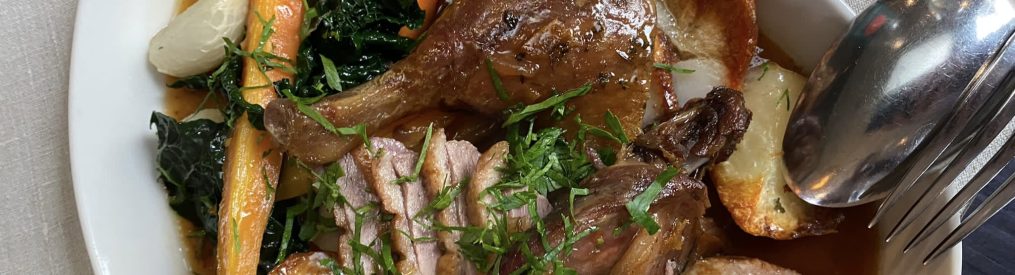
Winding along the long drive to Barragunda sets the scene for a secluded lunch experience. We have a late lunch booking. The carpark is full so we know we are not alone, but there are no people to be seen, and as we enter the second door it is almost surprising to open up into a busy restaurant.

The main bar and kitchen in the entry is the old barn, and the restaurant is an addition with a vaulted ceiling. Long glass panels give you a sense that you are almost in the beautiful native garden and backdrop of fire-touched trees on one side, and the kitchen garden to the other. The fireplace is a stunning feature, carefully placed firewood lining high on both sides. It’s extremely well thought out. A fine dining room at its best.
With all the natural materials it shouldn’t surprise anyone that this restaurant is all about sustainability, local and seasonal produce and ingredients, and the beauty of Australia. It was not long ago that there was less than a handful of genuinely “modern Australian” restaurants plying their trade. Now the best artists of this theme are pushing each other to greatness, while making new entrants welcome.
This small restaurant opened earlier this year in February, and means “thunderous roar of the sea”. Each diner is offered a tasting menu that crosses two sets of snacks, an entree, main, dessert (along with a refresher, and optional cheese course). The executive chef and farmer, Simone Watts, greets her guests hello as they arrive with a smile that shows she is in a happy place here.


As we finish our gin garden and revolver cocktails, each delicious and inventive without going too far off course, our first set of snacks arrive. The somewhat cliched, but normally delicious baby vegetables and ferments are lifted by a salty leek-top sabayon, and every last leaf and stem is gone in no time. More indulgent, a croissant sitting in honey, is topped with a cheese rind cream, and potato skin. There’s a sense of novelty, and since it is actually my first food for the day, there’s also a sense of correctness with a croissant to begin.
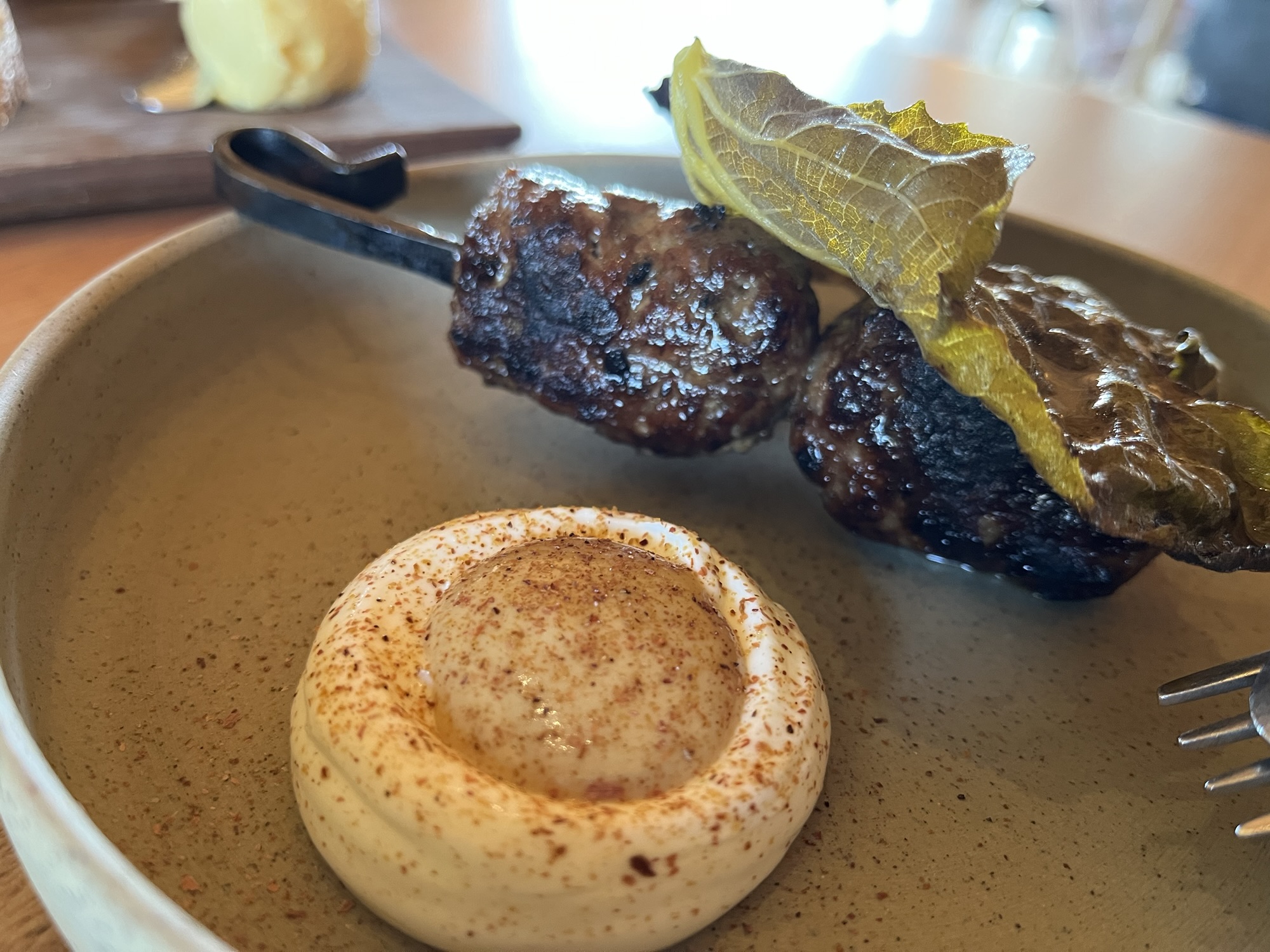
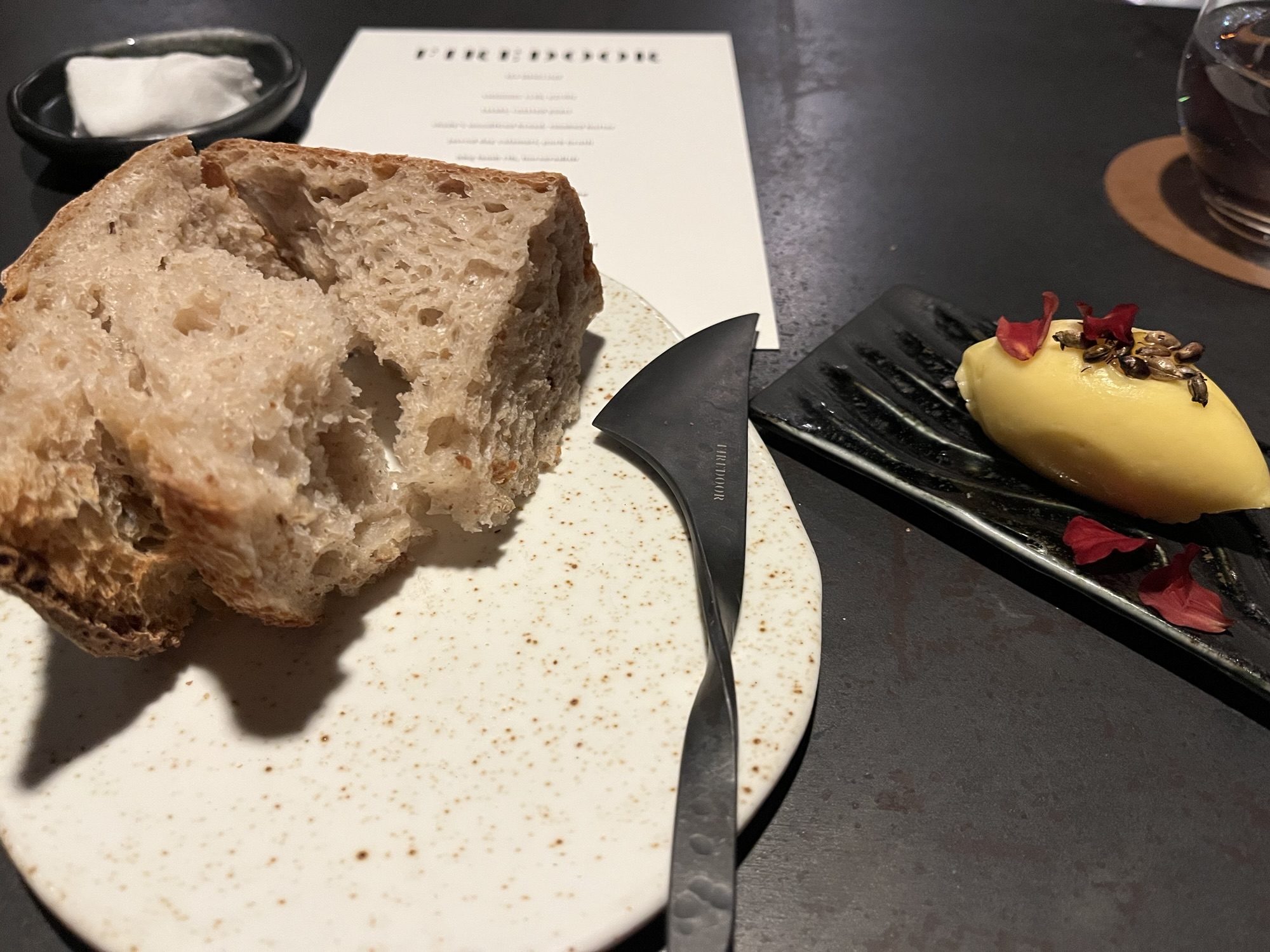
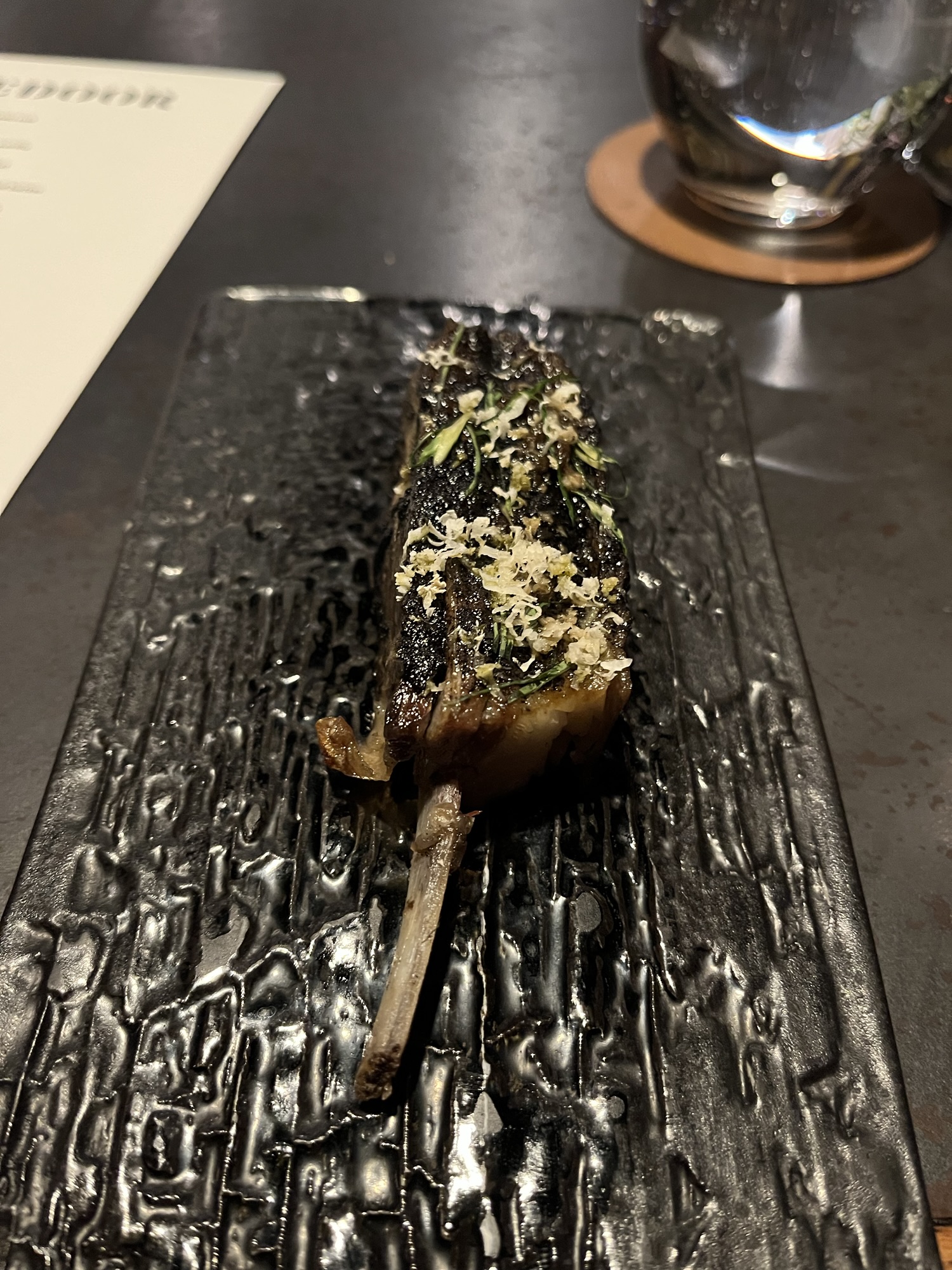
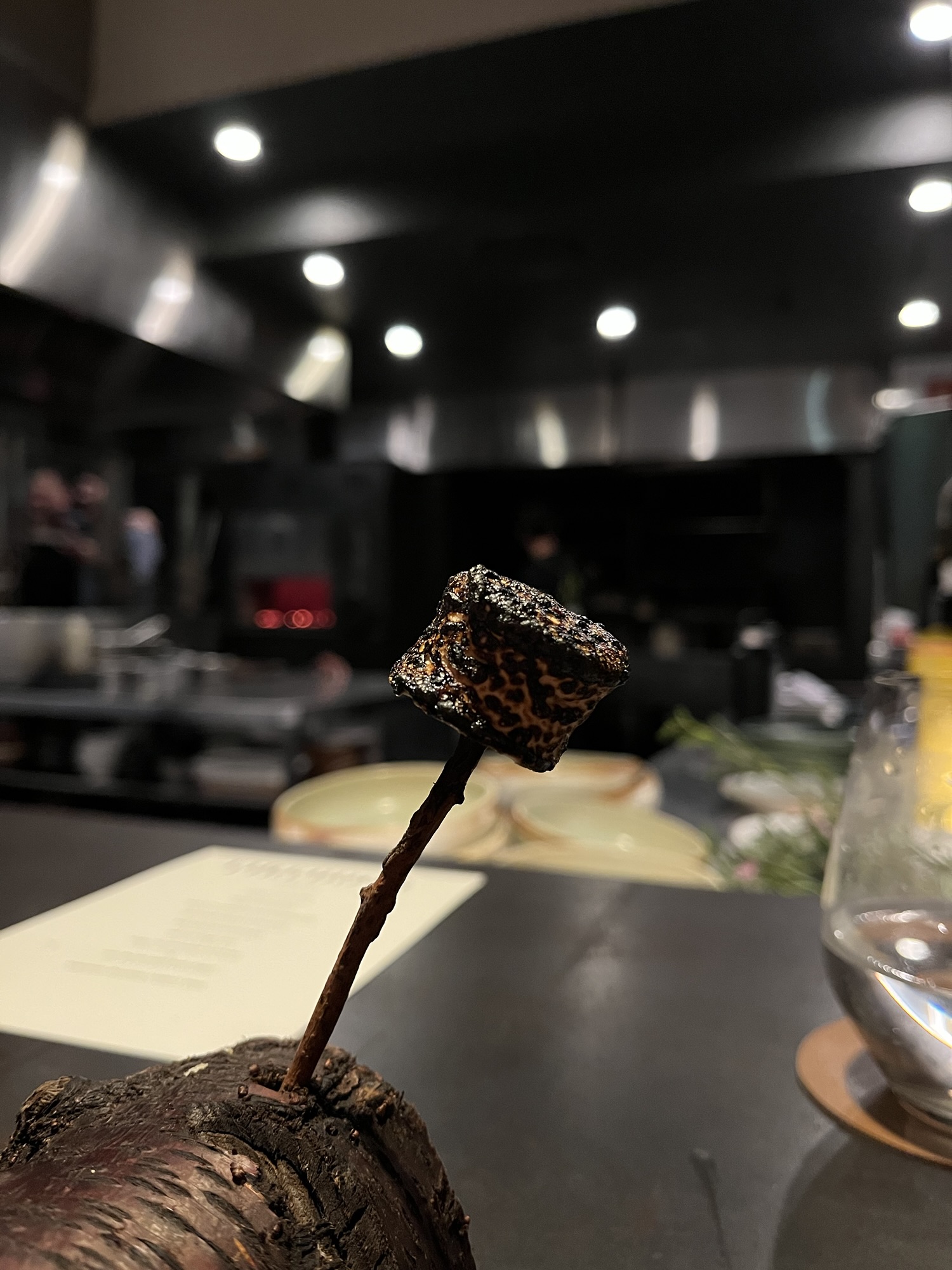
The next snacks turn it up a notch with a hogget kofta on a skewer, sidling up to sheep’s milk labneh; and smoked beetroot dip (kibbeh nayeh), topped with bresola made in-house. The take on the usually raw meat of the kibbeh nayeh with beetroot is tremendous, sourdough smacked with butter providing the perfect vessel to assemble the flavoursome combination. The hogget (yearling sheep) has some expected chewiness, but not in a challenging way, and the labneh dip softens the fattiness nicely.


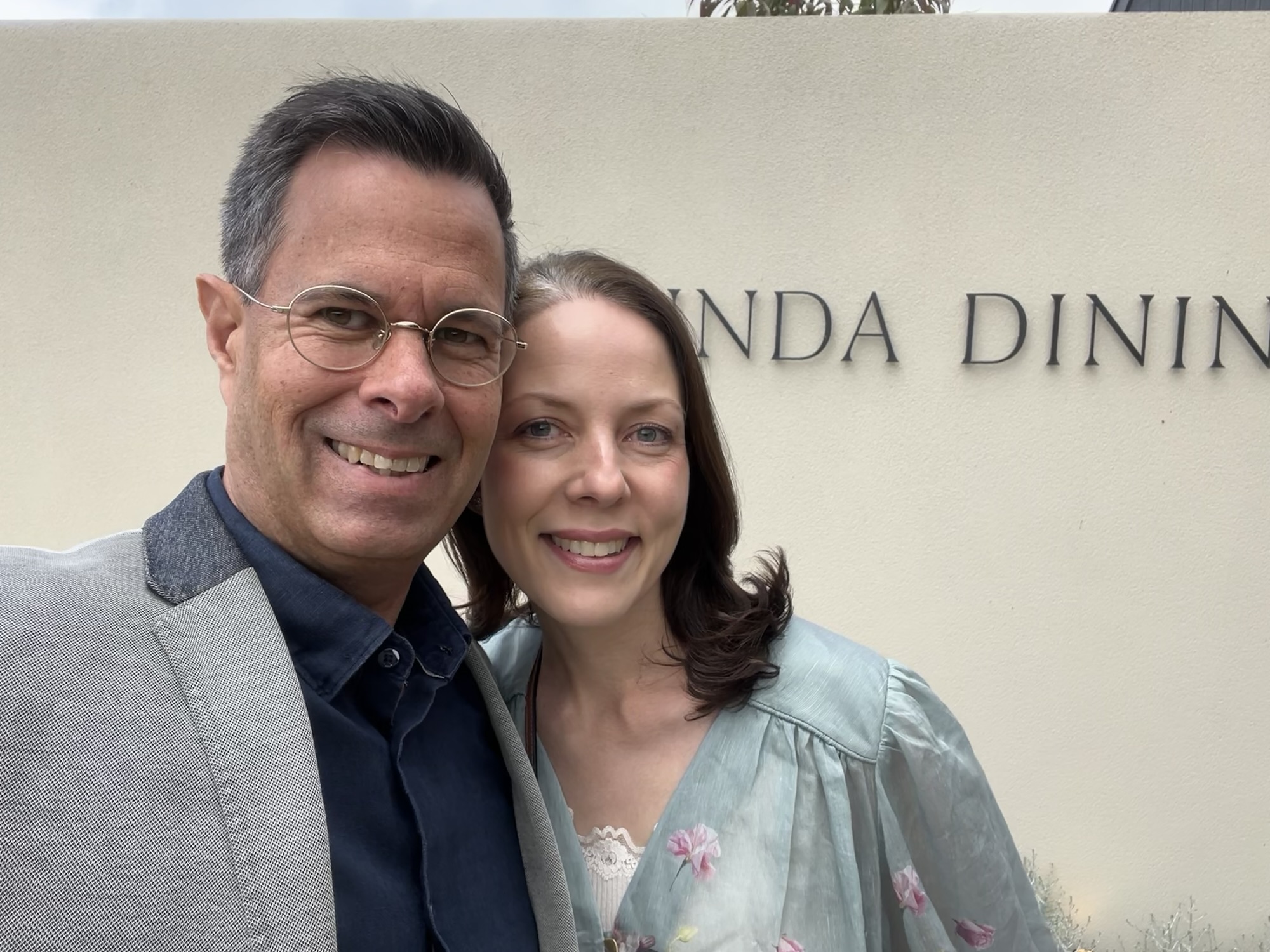
As we wound our way through some of the wines by the glass I realised there was an apparent common theme. From our sampling it struck me that the wines must have minimal intervention in the winemaking, and perhaps are organically harvested. These are not orange wines per se, but certainly had similar characteristics. It wasn’t mentioned by the sommelier so is not something that is pushed as a theme, but given the mission of the kitchen it makes sense.
My main assessment is perhaps my palate could mature, but I did feel there were some winemaking techniques that could have improved these still delicious wines by the glass. Out of the wines between us, the Terra Vita Vinum Chenin Blanc from Anjou in France, and the Domenica Gamay from Beechworth, were favourites.
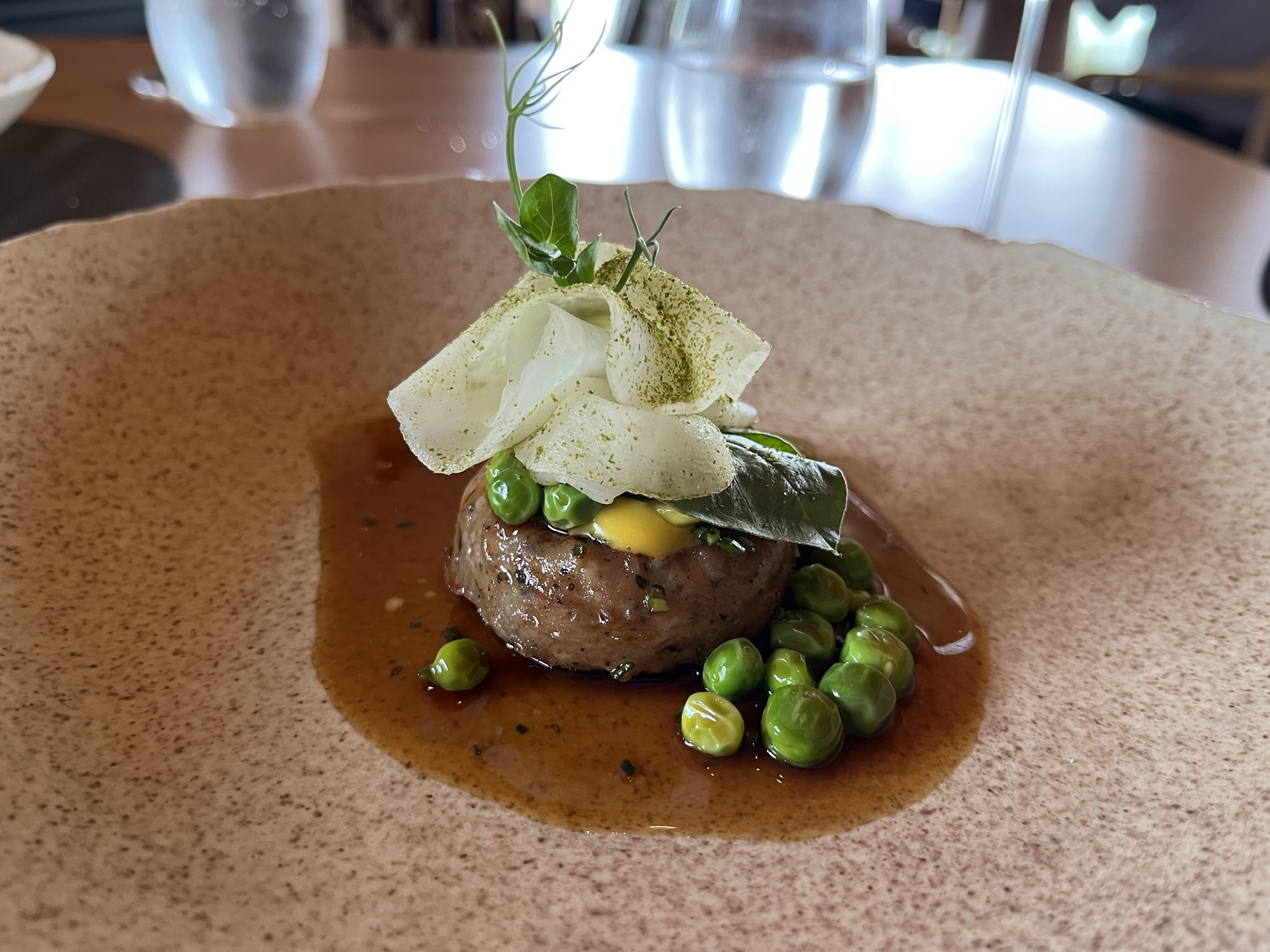

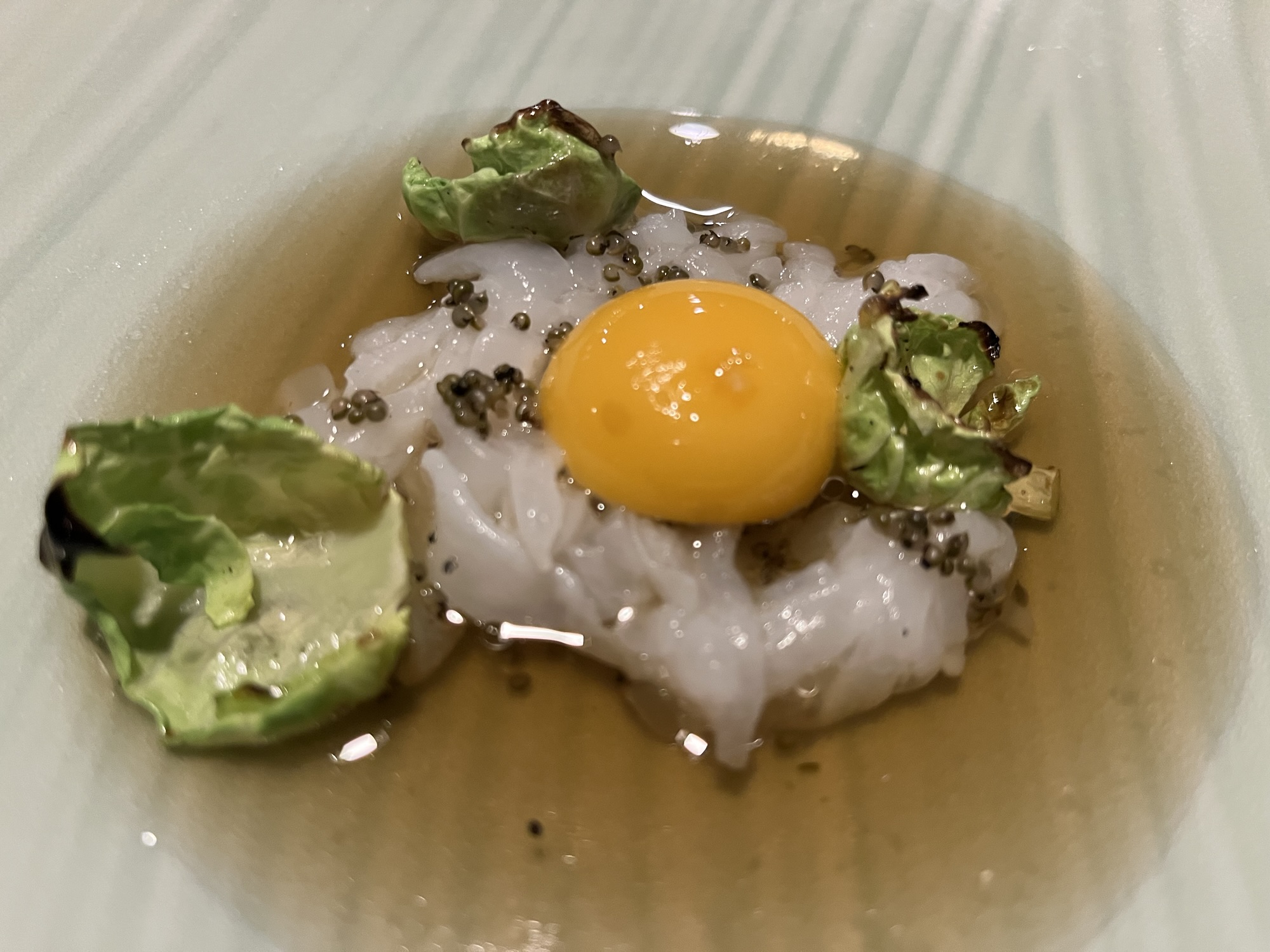
Back to the food, and there was a bit of a wait until the entree, but we were enjoying each other’s company, and the atmosphere in the room, with most tables venturing into the farm between their main and dessert. The “spent hen” with delightful spring peas and broad beans, pickled kohlrabi, and egg yolk, was worth the wait. In particular the chicken jus brought the elements together with a salty accent. There’s a lot to it, but the thought of Sunday roast chicken and gravy was hard to escape. The reference to “spent” is the fact that these previously commercial egg-laying chickens are “reclaimed” which might be a nice way to say they would otherwise be…
While we tried, there was no putting our finger on the personality of the floorstaff. While there was a range of experience shown, and different mannerisms and rhythms; in a small dining room they worked well together, and presented as people with a real interest in what the restaurant is doing. Rarely through the meal was a question not answered in some detail, and given the nature of the restaurant, there were so many points of interest I don’t think I stopped asking questions throughout service!

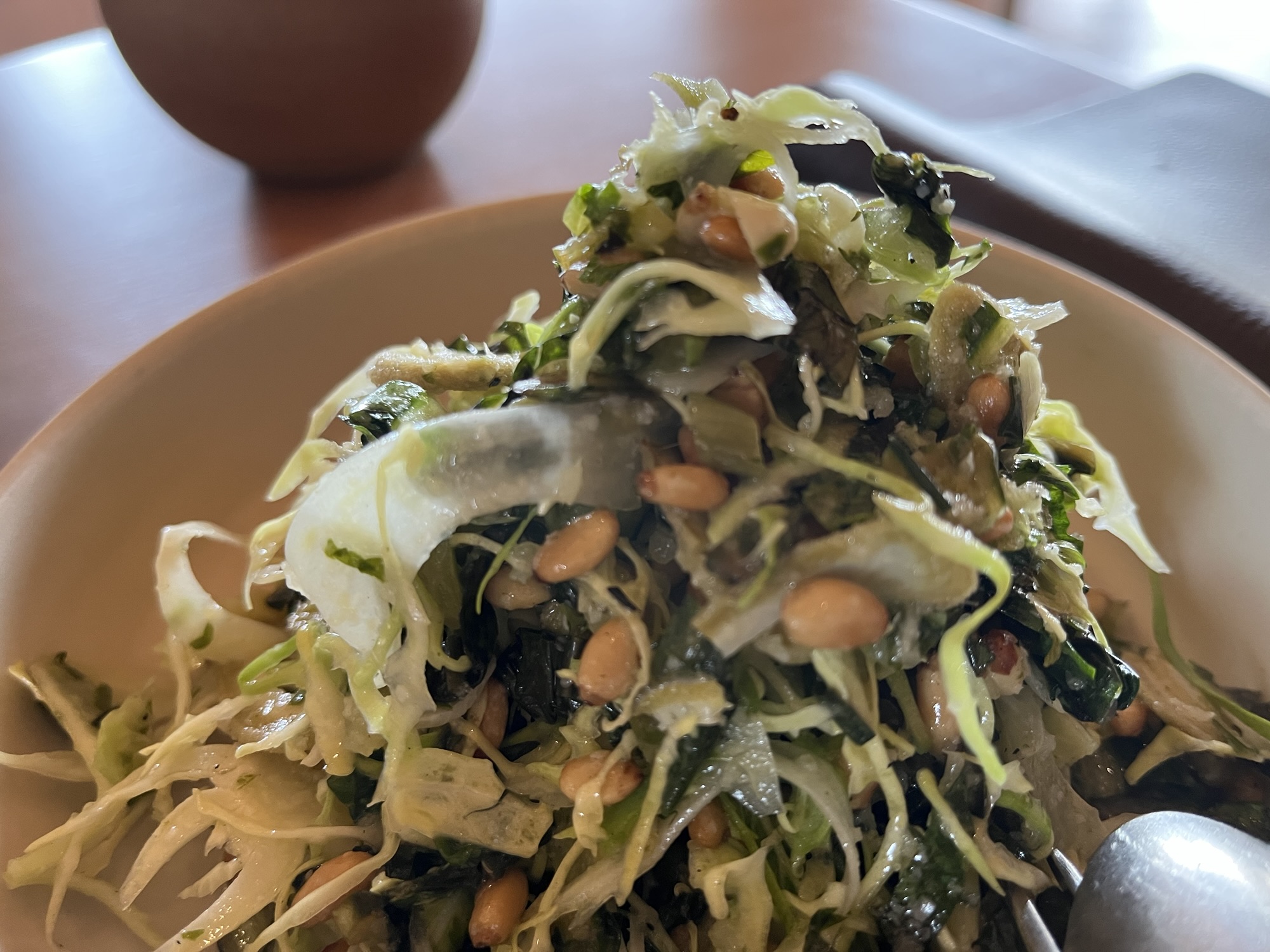
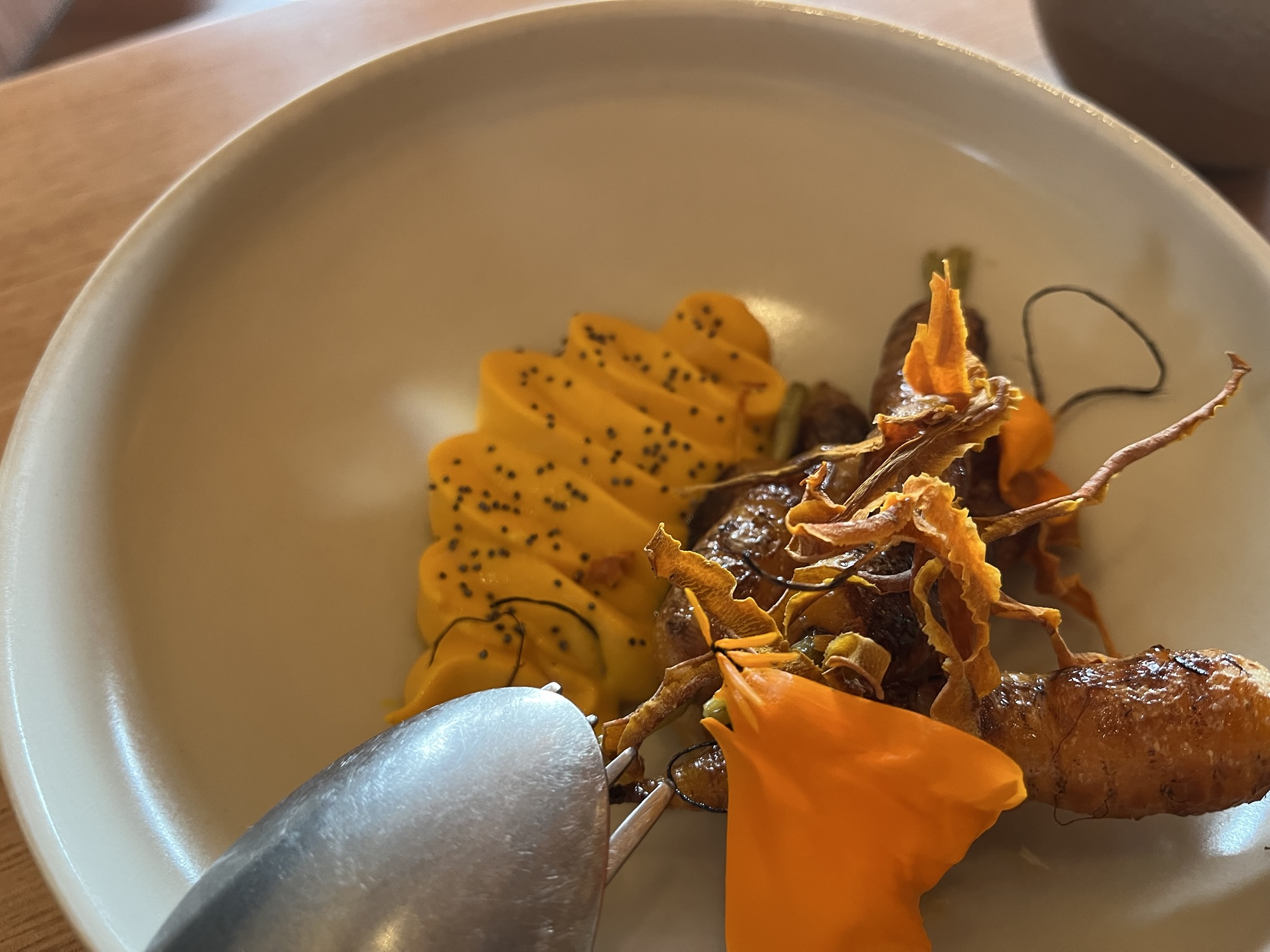
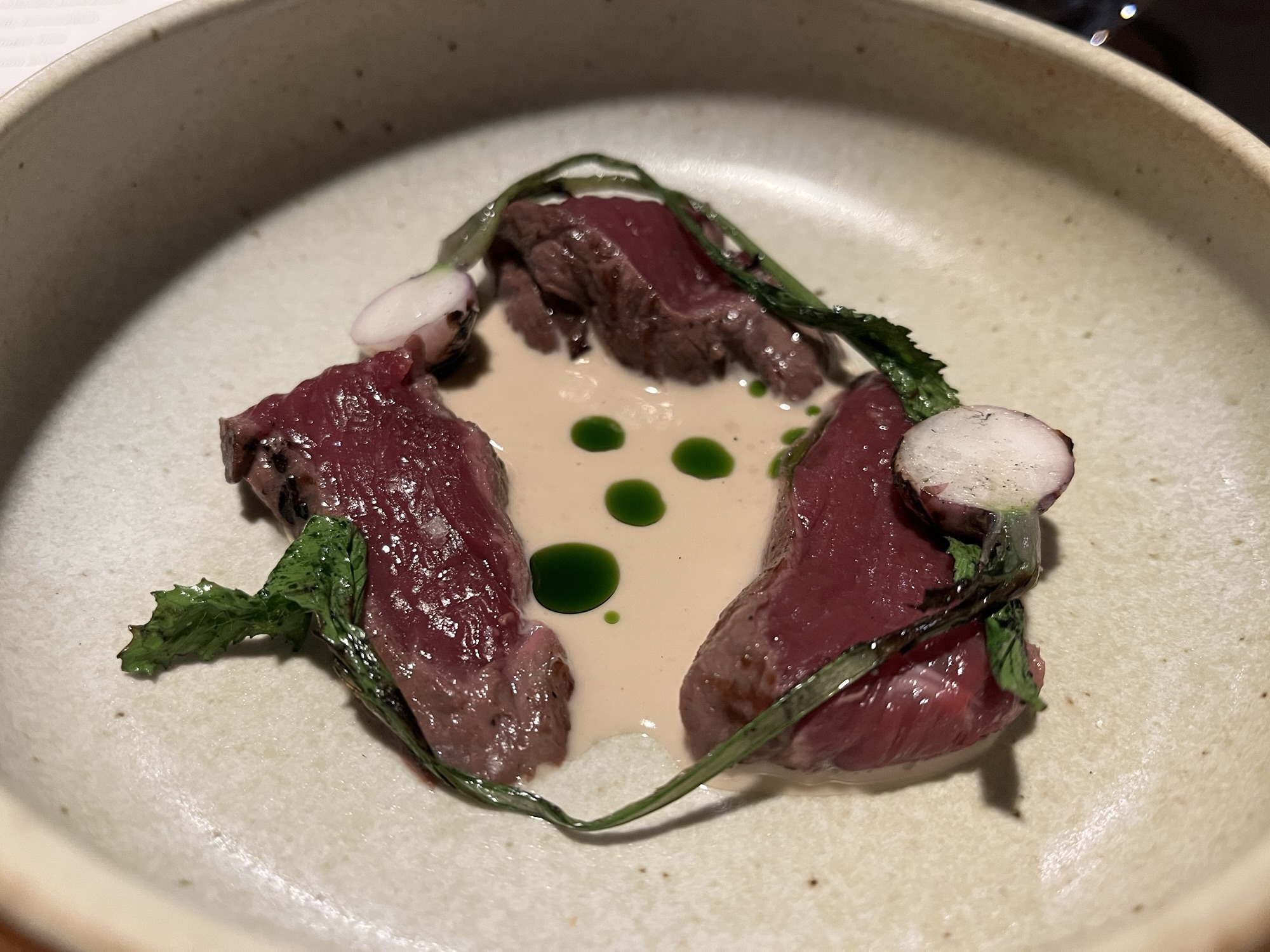
The food had been superb, and the Black Angus main provided yet another powerful showing. Both the rare cut, and the slower cooked osso bucco (with thickish garlic skordalia), were perfectly executed. My weakness for roasted carrots came in confit style with poppy, burnt honey, and buttermilk, and our other side of Sugar Loaf cabbage with puntarella (bitter Catalonian chicory), mint and heaps of pine nuts, was one of those sides that all of a sudden have vanished from the plate. All together it felt like a feast, giving off a very Annie Smithers vibe.


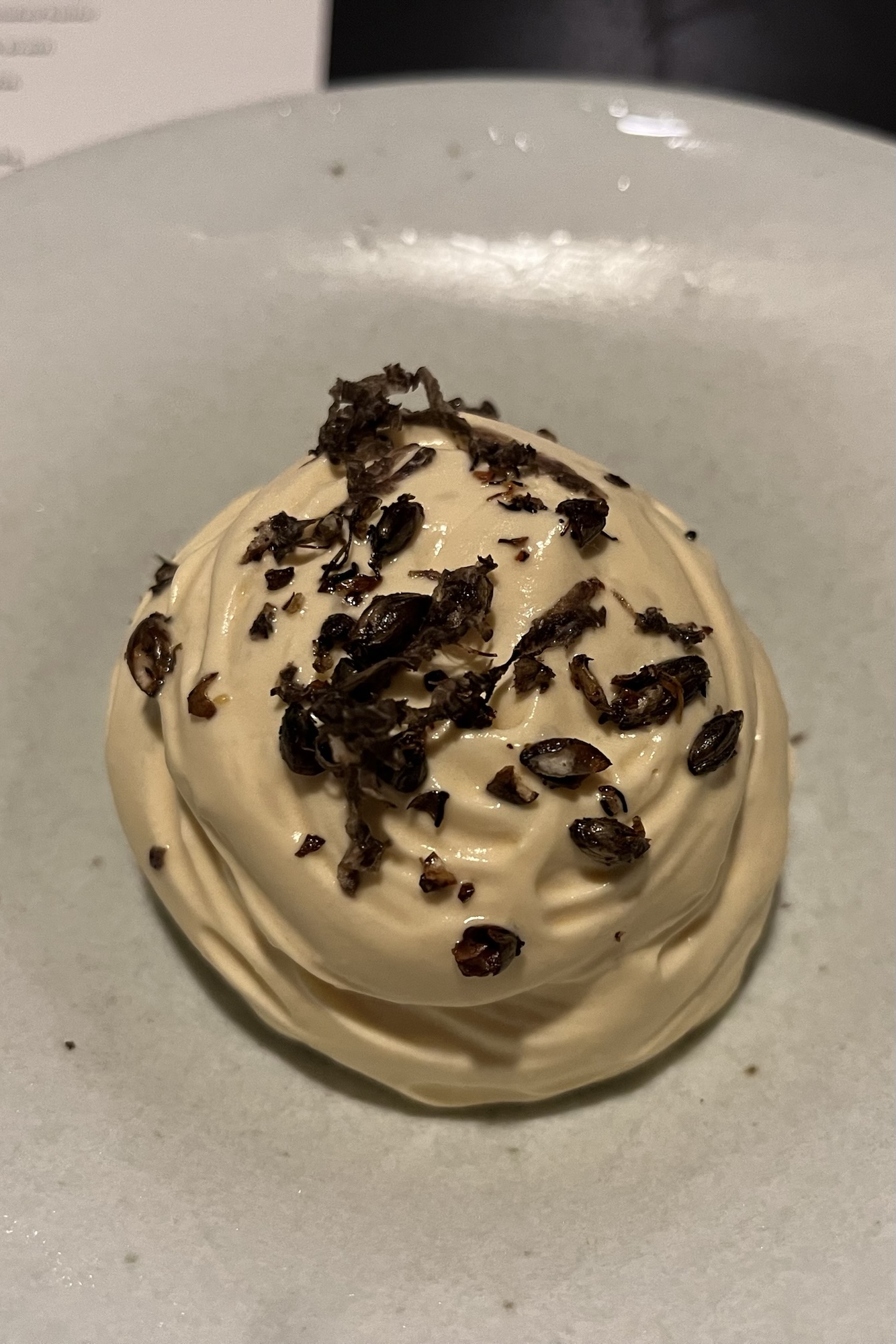
After our walk around the native and vegetable garden, we sat for our strongly flavoured coriander and celery refresher, that had a lift from the spice, and a certain addictive quality. Next we braced ourselves for a more balanced dessert, but were pleasantly surprised when the “Yesterday’s bread” turned out to be a fascinating take on bread and butter pudding, that shone from both a presentation, and flavour perspective. The toffee coating on the pudding, the use of lemon in several elements, and the creme fraiche providing a heavenly dessert.
There’s a very good reason it is difficult to get a table at this restaurant, and it is not only because it is small and only open four days of the week. You can sense the passion through the meal, and you can taste it in the creations of the kitchen. The incredible focus on the mission and vision of Barragunda is evident, and the style of dining couldn’t be more comforting.
Barragunda Dining
https://www.barragunda.com.au
Friday to Monday lunch
113 Cape Schanck Road, Cape Schanck
0386444050
info@barragunda.com.au



 BLK's Food Blog