
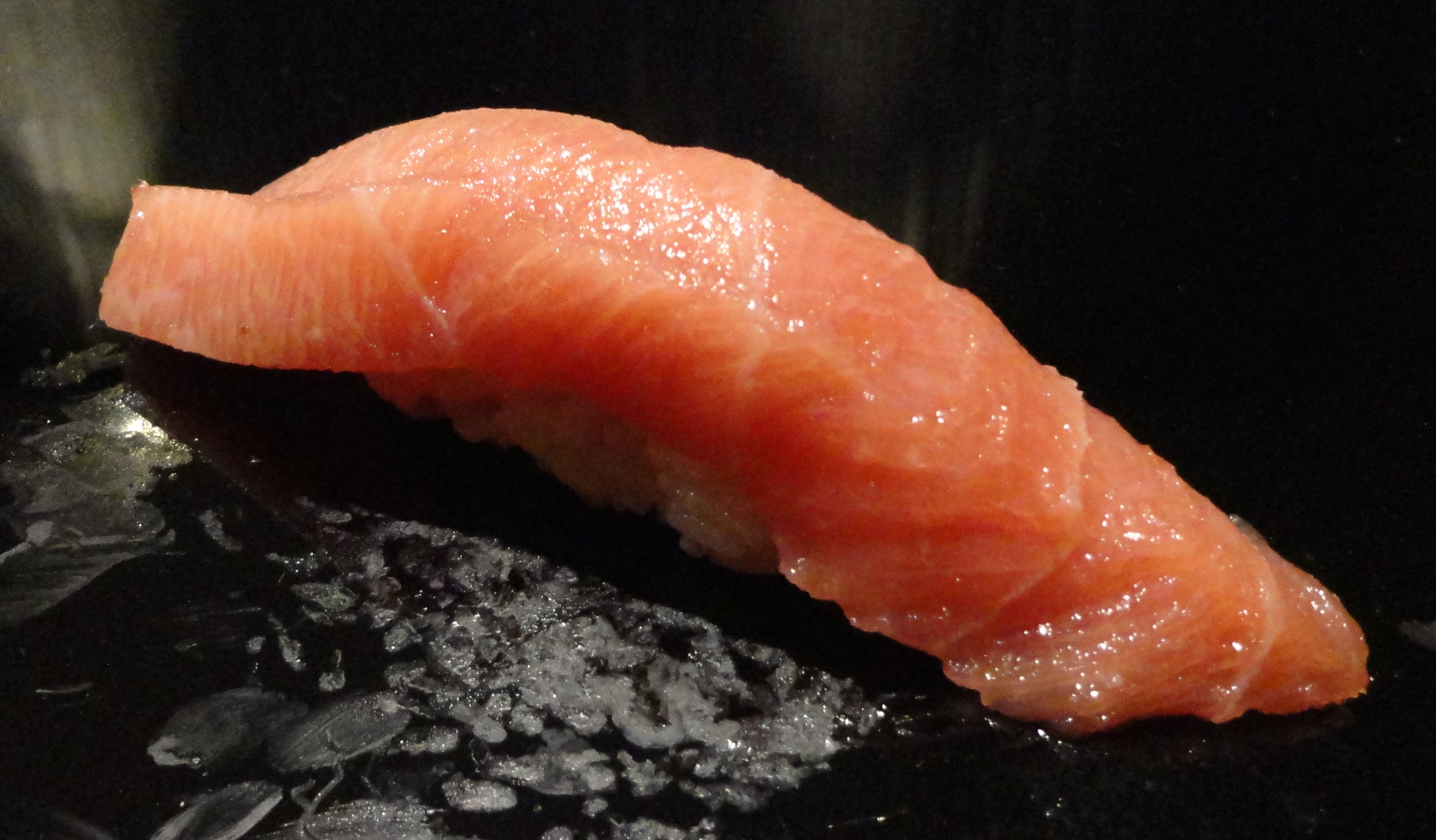
Otoro Aburi (lightly seared tuna)
Acclaimed fine dining sushi bar restaurant Minamishima is perfectly simple and beautifully complicated. What about this restaurant, or more accurately the talents of chef Koichi Minamishima, has possessed thousands of people to pay $150 a head for multiple courses of sushi?
I am out of my depth here and I have known it since Minamishima opened. While I’ve travelled a fair bit, I have not been to Japan, and I have no idea what is authentically Japanese, and what is the Western attempt. It is certainly not difficult to get a good impression of what great Japanese is all about with the likes of Tetsuya and Nobu now staples of the dining landscape in Australia. I have never had more than ten pieces of sushi that are all different though.

Calamari
I must admit I had to ask the restaurant to email me a list of the dishes because we had a private dining room behind us that was rather loud, so the quietly spoken Japanese waitstaff and chefs were no match when speaking through the courses. They do not provide a menu of any sort either, before or after the meal, which they should think about for people like me who are easily confused! Several courses of seafood consisted of ingredients I have never tried or even heard of. There were so many courses that I’m just going to write about what I really liked.

Hotate (scallop)
It really is all about the sushi, presented in the nigiri style. The rice is heavenly, consistent across the board, and I’ve never eaten sushi rice like it. Every time I detected wasabi it was perfectly uniform across the rice too, but hidden by the most pristine, often shiny, incredibly fresh, pieces of seafood that you will ever see in Melbourne. The toppings were so small that it was hard to notice they were there, but given I put the whole piece in my mouth each time, I can only imagine the quantity added a touch, without overpowering the star. Put together the presentation was on several occasions quite breathtaking.
Otoro Gunkan (tuna belly)
My Western propensity for cooked food told the story. Without doing the maths there were say fifteen courses of sushi and but for the three courses of tuna, my favourites were all cooked very lightly. The hotate or scallop sushi was quite incredible. That subtlety of the scallop perfectly presented with nothing to outshine it. The prawn sushi was lightly cooked too and I found it better than the optional additional course of scampi which, while beautifully presented, was strong tasting with a firmer texture, and not as good in my opinion.
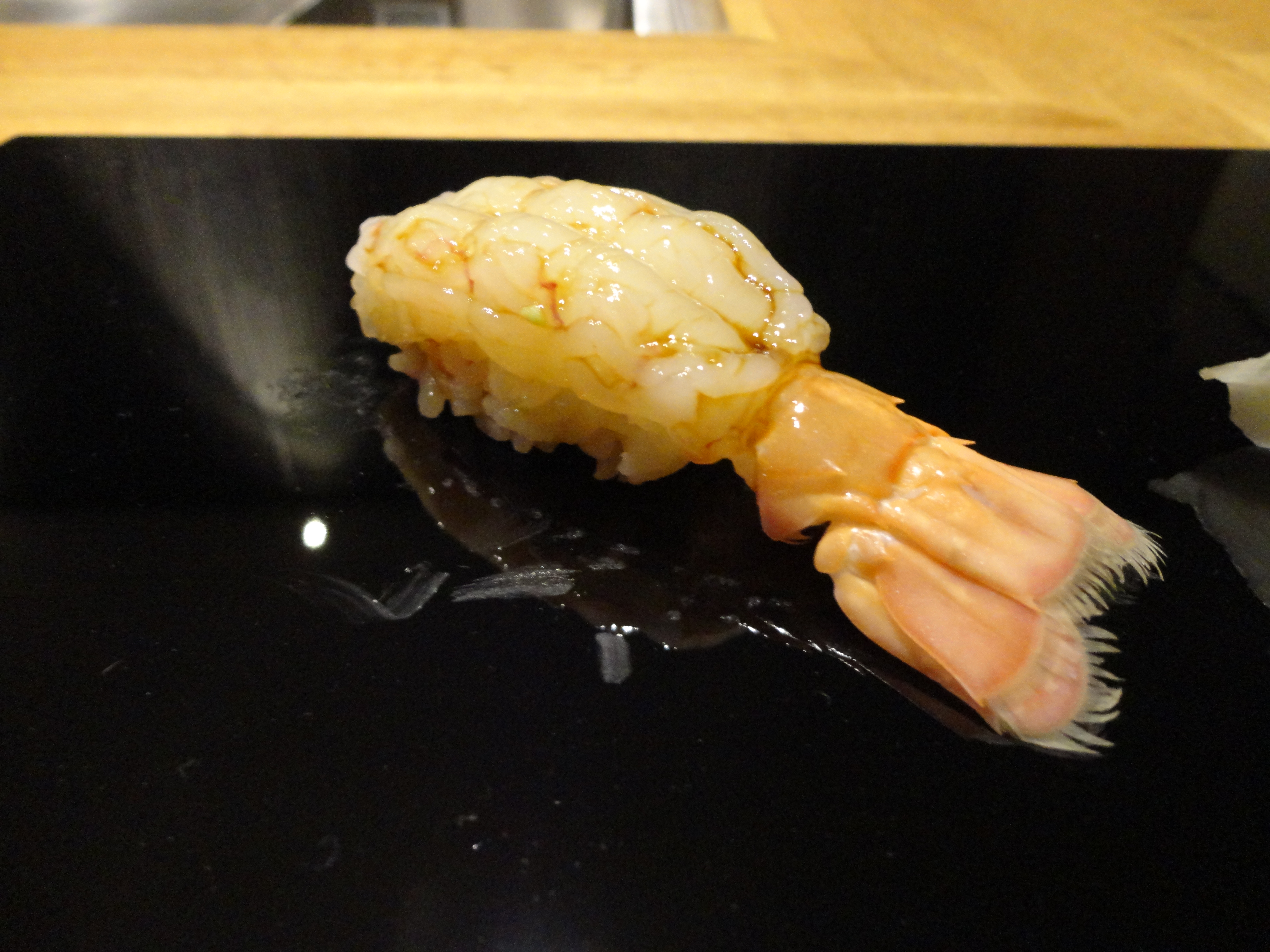
Scampi
The three tuna courses were very exciting. I have never had tuna belly of the quality provided by Minamishima, and it is the seafood equivalent of one of my favourites, bone marrow. As much as I loved the belly, the “Otoro Aburi” was exquisite. Slightly seared it still had a certain sublime fattiness, but for me, a deeper flavour. From these highs it was always going to be difficult for the Akami tuna to raise the bar, but it was still gorgeous.
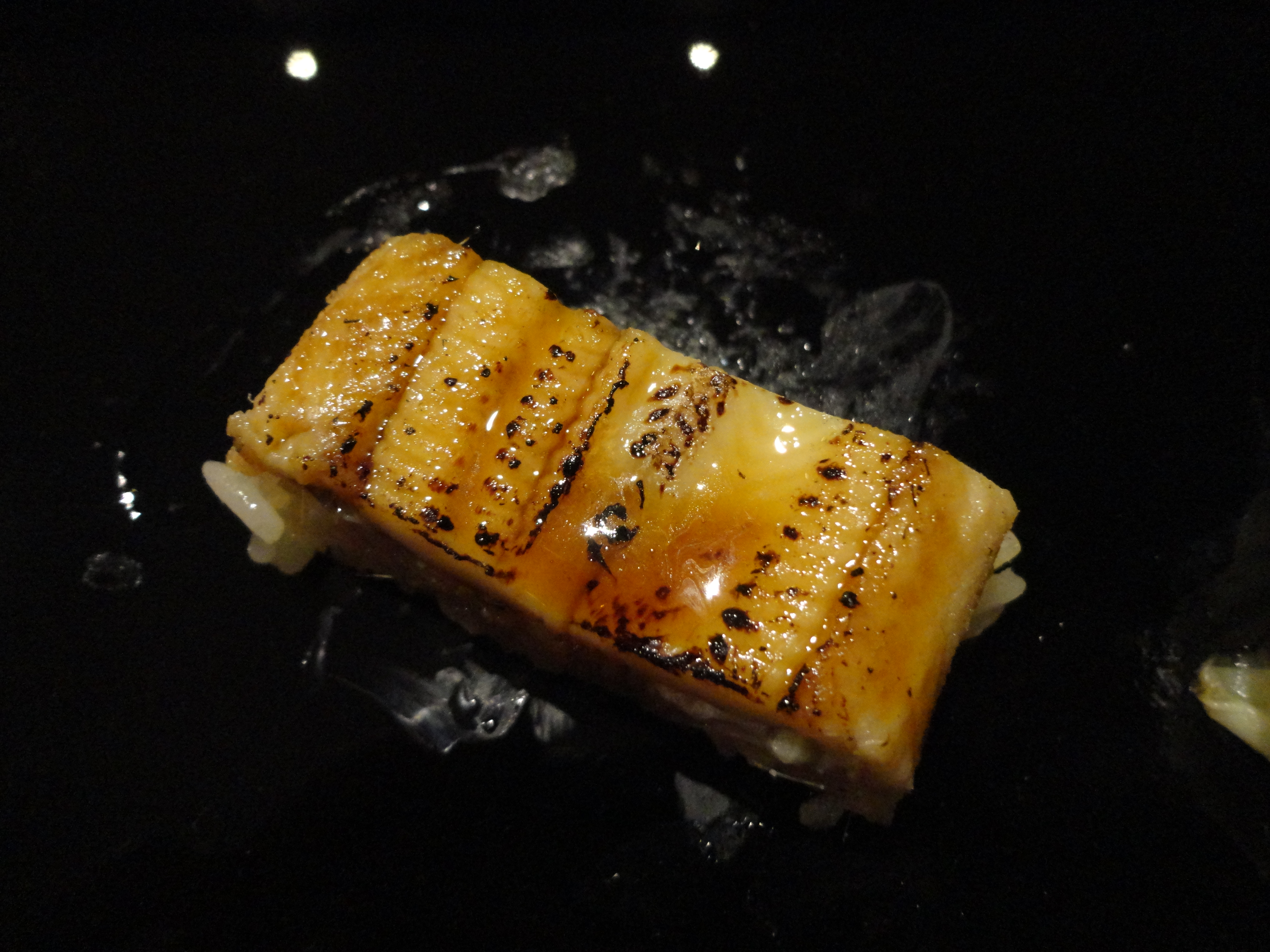
Anago Kyoto style Box sushi
In the beginning white fish featured for four courses before other forms of seafood, followed by tuna, and more dominant flavoured fish towards the end. I love kingfish and the closest to it was the king dory that came out as the first piece of sushi. The lightly flavoured fish was a good familiar start to proceedings. Towards the end my highlight (again slightly cooked sorry) was the Anago Kyoto style box sushi. The richness of flavour a highlight.

Saba (mackerel)
As I said it is all about the sushi. You need to dine at Minamishima understanding that you are having an expensive, but memorable sushi experience.
I was not overly impressed with the first course of Ama Abi (sweet shrimp) with Kurumi (walnut) tofu. I am sure there is a lack of appreciation here, but I can’t apologise for not being familiar with softly textured tofu in a broth, though the broth was very nice. The tamagoyaki (omelette) was delicious as a refresher following the last piece of sushi and was the only overtly sweet aspect of the tasting. Before dessert we had a beautifully presented stuffed zucchini flower with prawn paste and yuzu dashi broth, showing off both technique and use of subtle flavours. That was the last good dish because the Hassaku (citrus) Jelly and Hojicha (green tea) ice cream was not. The instruction from the waitstaff was to mix it all up which lost the potentially great flavour in the green tea ice cream. As we started our meal I had noticed the couple next to us almost not touch theirs after initial tastes (but they had not followed instructions). It is a pretty dish, but it needs some work.

Hassaku Jelly Hojicha ice cream
I would never order the matching wines again. From a great start with The Lost Plot 2004 sparkling from Mornington, and a nice Austrian (2013 Hiedler Gruner Veltiner), we descended into a spiral of unappealing wines. For novelty value it was good to have one or two sips of the wine from Japan, but they do not make a lot of wine, and there is good reason why. The French rose was lacking brilliance for a meal like this, and the Georgian wine (from the origins of wine making) was offensive. We took it in good spirit, knowing the sommelier was trying something different, but some of the wine actually took away from the excellence of the food. I should have ordered the sake, but I am not familiar enough with it, to properly appreciate having several tastes. Next time I’d focus on full glasses of the first two styles.

Mr Minamishima (closest) in action
All of the chefs preparing the dishes, and the waitstaff on the floor, were professional and friendly. Once we had the courage to ask some questions, we started to gain some knowledge that is not necessarily provided as a matter of course. This is so different that I feel a bit more education could help, but I plan to make another visit and ask all the questions I still have now.
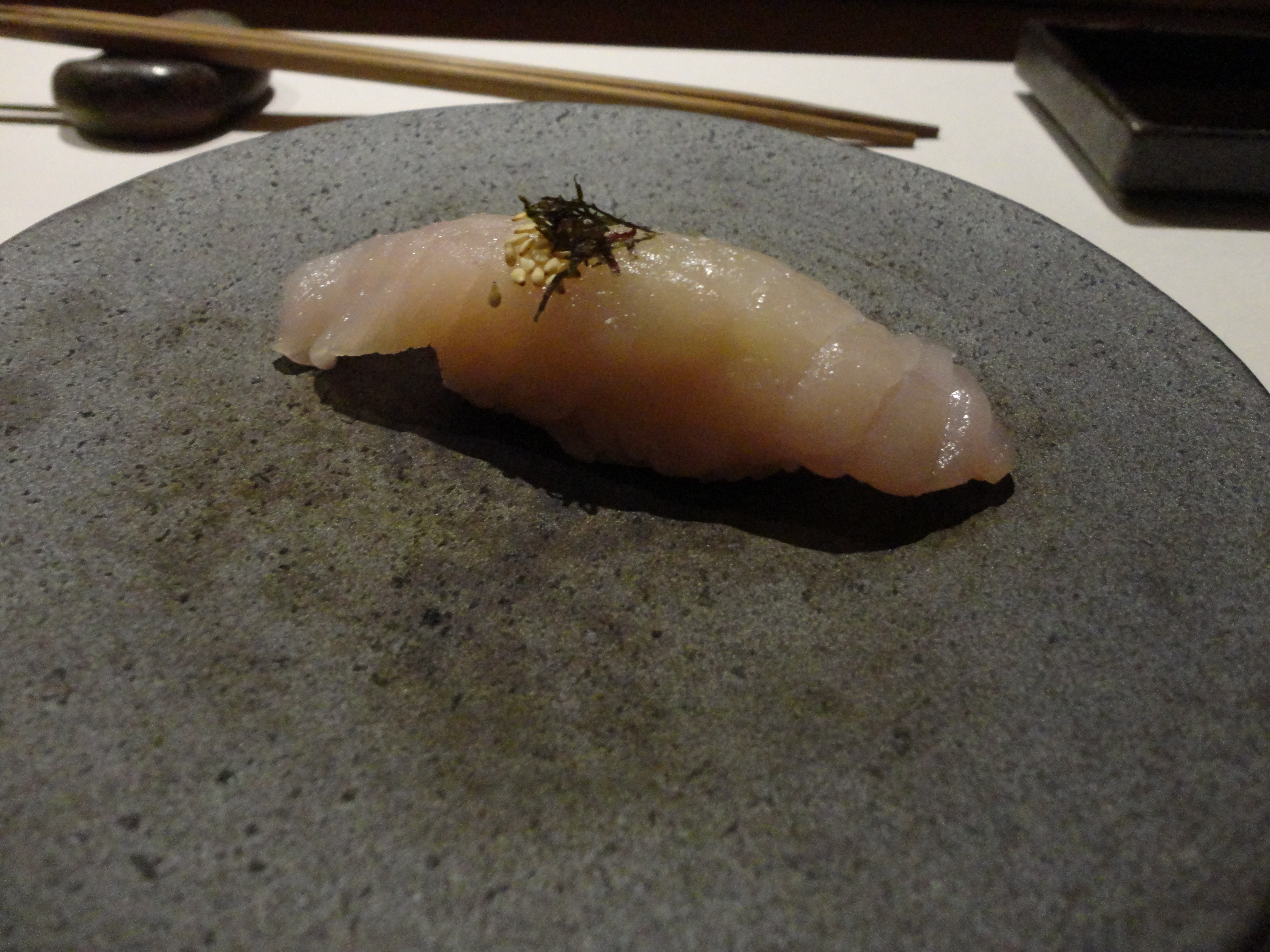
King dory
It is only five days since I tried this intriguing restaurant. The lasting memory of the food makes me want to go to Japan more than any other experience I’ve ever had. There is something very powerful in that, and in what Koichi Minamishima is doing for our expectations of what excellent Japanese is all about.


 BLK's Food Blog