A recent experience at a new restaurant was a reminder of some of the simple aspects of service. Like a lot of endeavours, there is not a clear set of rules. One size does not fit all, and often the temperament needs to meet the broader theme of the restaurant.
In this particular circumstance it was a busy Friday lunch service. The floorstaff were working together in an orderly fashion at first glance. Cracks started appearing as the pressure went on. Like waiting in security at the airport when you are running late for a flight, you could hear the floorstaff screaming on the inside.
December is a challenging time for service teams. The usual dynamics change, and larger groups become more prevalent for pre-Christmas catch ups. At a new restaurant the stakes are higher. All the preparation and planning cannot ensure a smooth service when push comes to shove.
I have high expectations for any service team, and its management. At its highest and best it is exceptional. Difficult to define or clearly explain, there is a flow and momentum to the best examples. Often you can find at least one element that is missing. At times it can be one missing element that breaks the momentum.
At this time of year, whilst there are great challenges, there is also a generally easy-to-please crowd. Catch ups busy with chatter, competing for speaking time, that build the noise in a busy restaurant, makes for customers that are lively and happy to a level that compensates for some failings.
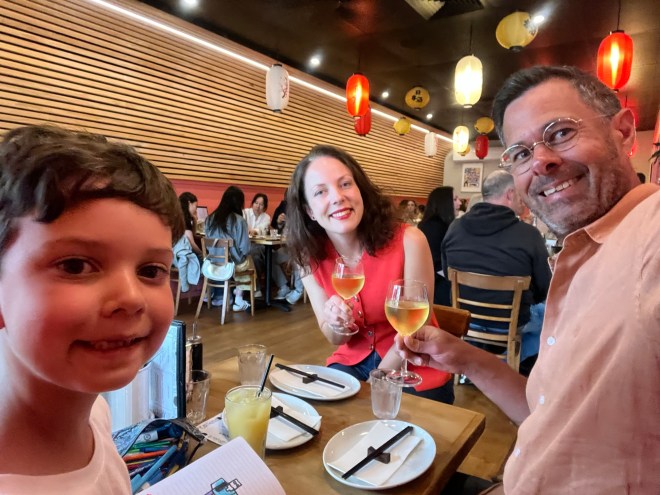
Back to my experience. I am thirsty. I asked for the drinks list a while ago. Why has no one come back? I got here with Ralph; Natalie and Graham have already taken the banquette, so I have my back to the floorstaff. When I turn around several times there is no attention. A Mexican wave of similar turns on other tables probably takes the impact of my turns away.
This had happened earlier. A young waitperson with long eyelashes had been the one who I caught attention from. Even though she is not allocated to our table, after what would have been at least ten minutes of turning around from time to time, breaking my part of the conversation, guess who is the only person I can find looking out to serve?
In between, I noticed habits had already formed that are hard to break. I was about six metres from the water station. Somehow our own waitperson had gone from table to table to fill up other table’s tap water but decided to not look up once either prior to, or following, each return to the station. Other’s walked past with their head down, and in a noisy restaurant didn’t hear my “excuse me”, or worse they ignored it.
Ironically, because we had been drinking sparkling water, we were not having any water service, and in the end we asked for more sparkling water three times before we gave up, and were refilled with the tap water. The flow of great service appears to me as gliding around a dining room. Without losing sight of safety, simply moving faster and acting more alert are two ways to impact service. It makes complete sense from a business perspective too. Provide a paying customer with what they are asking for.
All of this had me thinking about how I assess the quality of service in restaurants. The way that having your glass refilled every three minutes is uncomfortable, but having a completely empty glass for five minutes is just the same. How natural your waitperson is? Are they treating you too familiarly as if you are reuniting with a long lost friend? Are they stiff and too formal? It is very hard to judge. There is no rule book.
One cliche is, “the best service is service that is unnoticed”. I disagree. I want competency in the role above all, but some friendly banter, and the ability to articulately answer questions and add some character makes the experience better. Everyone on the floor should know the menu thoroughly, hopefully they have tasted each dish (especially in higher end restaurants), and they should be aware of basic dietaries and allergens in each dish.
Consistency is the key. The best managed service teams know their roles and execute on them, assisting other team members at certain points through the service, but not continuously. There should be no weak links. You should experience the same level of service wherever you are seated. Attentiveness to the diner is what often differentiates the best service teams. Attentiveness means understanding when old friends are catching up and need some time before ordering. It is understanding the dynamic of the table and who are the captains, or who is the organiser. It is asking appropriate questions at appropriate times. It is gauging the experience of the diner.
Service is not one-sided. When Catherine and I go out we take our manners with us. The same way we would thank friends or family around the kitchen table, or retail staff at the shops, is the way we treat the waitstaff. We offer comment on the food and drink we have been served, and try to make sure we provide constructive criticism if we notice something that the chefs, or the management should be aware of. We say goodbye as we leave, and it is often a key area of service in how we feel leaving a restaurant. The greeting should be warm and inviting.
It’s time to write a list. Here’s some expectations I have when going to a restaurant that has a hat / star (or more). In other words, a serious restaurant. There is a bit of an order, but not necessarily of importance. Naturally there is too much here to be front of mind on each visit, but incredibly, many of the restaurants we have been to around the world exhibit all of these characteristics and qualities, making them some of the best experiences you can have.
- Communication prior – a great deal of the niceties of booking a table are gone, but there is better practice in the online booking experience, the credit card deposit / hold, and the confirmation / modification experience. I’d suggest it is never perfect and needs constant attention, and that all staff should have used the booking system at some stage to understand it.
- Website and search engine updating – I once turned up to a restaurant and explained that although I knew it was open on Wednesday nights, the search on google told potential customers otherwise. They debated it until they checked and realised it was indeed showing as closed. Regular checking and updating in this online world is now very important.
- Minimum standards – knowing the traditions of service such as table settings, where to serve from, how to pour, how to take orders most effectively, carry plates, remember table numbers, and which guest is having what. These basics are learned, but by the time a waitperson is employed in a top class restaurant they should be second nature.
- Attentiveness – hard to define, but I like a meal to flow, with floorstaff who have an intuition for what the diner is looking for next, when to hang around for a chat while resetting the napkin for a guest using the toilet, when to check if the diner has tried a particular ingredient before. There’s too much to it, but when it is there you have a far better restaurant experience. Sometimes without noticing.
- Care – genuine interest in serving is an attribute that makes more impact than any other. Missing a customer’s order of a side dish, or a drink, is far more forgivable if there is a genuine apology and a quick rectification. Not knowing the ingredients in a dish is fine if the promise of asking the kitchen is promptly kept. Checking on whether the table is enjoying the food can come off as caring, or can be seen as going through the motions, so only check if you have the right intentions.
- Intolerances, allergens, and dislikes – I have none of these, but Catherine does, and plenty of my good friends and family do as well. Dietaries are super important to those who have them, and is probably the first area of critique in their dining experiences. Getting it right is not only caring, but makes repeat business much more likely.
- Balance – stiff and formal service is a thing of the past, but you are not best friends with the floor staff either (or are you?) Finding balance in the character of the customer, and trying to meet their expectations, while being authentic is a talent, and one of the reasons hospitality is so difficult.
- Flexibility – please don’t say you will check with the kitchen if you already know something is not possible; please don’t promise something you are not sure can be provided. Within reason the dining experience should be flexible without opening the floodgates.
- Mannerism – working effectively and efficiently and looking calm is best. If all else fails work faster and harder. The worst look during a busy service is of a clearly uninterested, slow, and inefficient waitperson.
- Wine service – the best time to offer me another wine is immediately as I finish my last one! Coming to the table and offering another is better if you have the wine list or a fluent knowledge of the wines by the glass. A tip to those who like to try a few is to take a photo of the wines by the glass, which means you can always consult your phone while waiting for the next one. All other aspects of wine service are nice traditions including the presentation of the bottle, and the offer to taste. Another note is that the offer to taste isn’t to make sure you like it, but to check if it is oxidised, so screw caps have made most of the consultation merely ceremonial.
- Experience on the floor – you cannot master anything without having significant experience. Have patience with new floorstaff, but do not have patience with restaurants who hire new floorstaff and do not provide them with adequate training and familiarisation to the restaurant.
- Experience as a diner – any waitperson who genuinely loves their job, also loves being served on their days off. They know what to do because they have been on the other side many times and will continue to do so. What do they like when they are on a date or dining as a couple? What about for a family celebration; or in a large festive group; or for business? These aspects set the scene and good waitstaff understand the best way to serve different dynamics.
- Communication / relationship with the kitchen – if you keep an eye on it your intuition will tell you if the floor is working with the kitchen as a team, or whether they are combatants. I’ve seen some huge arguments in the kitchen resulting from the high pressure of a busy service and the restaurants who have good teams across the board can work through those pressure cookers, and others will explode.
- Good management – well managed restaurants are happy places, and great to work at. The right number of staff are on each shift and where other circumstances are encountered, the managers step in to help and direct. No one in the restaurant says “that is not my job”. The restaurant is profitable, and the staff are paid well, and receive incentives to continue their loyalty. I’ve worked in toxic kitchens and it is normally rotten from the head. When this happens it is only a matter of time before the restaurant shuts its doors and no one wins.
- Greeting – firstly make it easy to locate the restaurant (normally through the website and attention to google and apple maps). Next say welcome and already know the names of the people coming in around the time during service. Then quickly seat the diners and perhaps for early bookings check if the table is fine. Get a feel for the dynamic of the table and pass it on to the dedicated waitperson if there is one, or to those on the section.
- Receiving payment – if someone has asked for the bill, make a note to follow up with the payment machine soon after it has been put back down and is no longer being assessed. The number of times I’ve had to ask for both the bill, and then to pay the bill is astounding. When taking payment do not say “you can leave a tip” as this is now generally known.
- Goodbye – it can be an empty feeling leaving a restaurant where you have realised the staff just want you to leave and have disappeared from the dining room. Even if you are frustrated that the last table have stayed chatting well past what is polite, still thank them for their custom and bid them farewell. It is not difficult and can be the difference between a feeling of comfort leading to a repeat visit, or the alternative.
- Research – somewhat controversially, some restaurants will check the social media of the organiser and see if they have any particular likes (or dislikes). I first heard of this at Eleven Madison Park. This is a difficult endeavour but having a quick system of checking if someone is a repeat visitor is not difficult with technology, and I’m sure large language models are getting better at providing an understanding of dining habits. Utilise this unless it feels on the verge of creepy!
- Restaurant layout – smart layouts in restaurants can really help. I love space between tables but this is not always possible, or business sensible. However, no table should be out of sight from regular service (and if it is, it is not an excuse), and the layout should be efficient with lots of waitperson stations that are well equipped, but a little hidden.
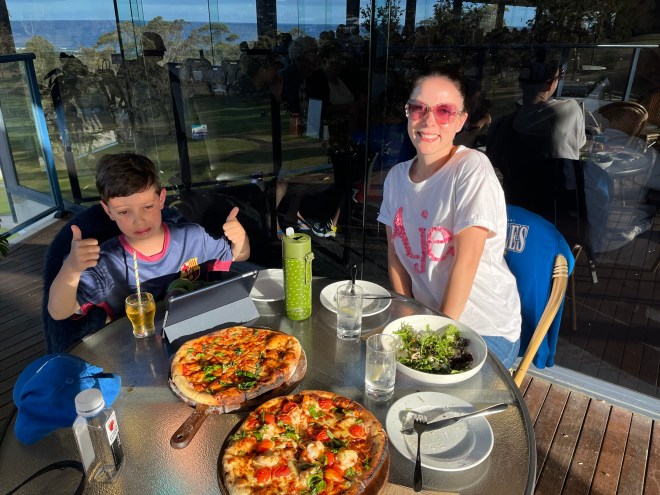
- Children – I have a five year old. I feel nervous every time we take him to lunch or dinner at a nice place. More often than not we pre-ask if it is okay to gain some comfort. More often than not other diners say they cannot believe he has behaved so well (thank you iPad and headphones, and finding seats that face away from the other diners so they don’t see his latest favourite YouTube family!) Sometimes small gestures and service niceties make all the difference to us, and I tip accordingly, understanding a seat is sometimes being taken away from a better paying diner. I am not saying children should be brought to restaurants and specially accommodated. But I am saying that it can be the difference in their parents returning, sometimes with that same child year after year, or in other groups.
Gelling this all together is the reason why the upper echelons of restaurants and service teams are so rare. The results when it all works is beautiful. Happy customers, waitstaff gliding effortlessly through their shift, and usually an atmosphere best described as convivial, are the signs of greatness.
If you would like to find out some examples of the points above, or where they all come together, please comment or send me an email (bleekong@gmail.com). I’d equally like to hear from anyone who reads this post of their thoughts, and their good (and bad) experiences.


 BLK's Food Blog